


2D Unity Not on the Natty Plan Says Canonical

“It's not on the Natty plan for now, but we'll be evaluating the progresses and will consider adding a 3rd session option if the development goes as planned,” said David Barth, Desktop Experience Team, Engineering Manager at Canonical.
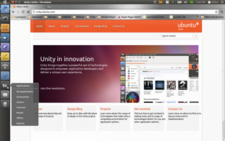
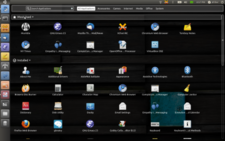
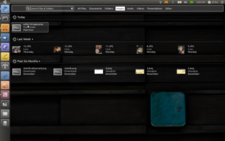
Unity 2D developer and Canonical OEM team lead, Bill Filler, created a lot of buzz around the 2D Unity option last week when he published a post entitled Unity 2D. Filler’s original post was unavailable for several days and subsequent is now available again to the public and the screenshots included are from that post.
The removal of the Filler’s blog post prompted Linux Pro Magazine Online (LPMO) to contact David Barth, Engineering Manager for Desktop Experience (DX) Team, at Canonical, to find out the more about the future of the 2D Unity option in the Natty release.
Barth clarified that Filler is the developer and the DX Team participates in the development of the project by sharing foundational elements such as bamf, dee, places and more.
LPMO asks Barth, “Will there be a 2D Unity Option available for Ubuntu 11.04?" “It's not on the Natty plan for now, but we'll be evaluating the progresses and will consider adding a 3rd session option if the development goes as planned,” said Barth an exclusive interview with LPMO. “For Natty, the plan is still to have Unity 3D and the Gnome classic session as a 2D fallback,” continued Barth. “The classic Gnome desktop will be kept as the safe and recommended default, even if a 3rd session is added. This is important for a lot of our users, in the community or in enterprises,” he added.
Barth said that people who don't have the kind of 3D support Unity requires because either they have old cards, or brand new ones that have issues with drivers as well as ARM systems without 3D drivers were the target audiences the DX team at Canonical had in mind when it starting the project.
“2D Unity, will not require require proprietary graphics card drivers, it will require regular 2D acceleration support; however, in an unaccelerated, plain framebuffer it doesn't work that well,” says Barth.
Barth wanted users to know a little more about the 2D Unity option. “Unity-qt is exemplar in 2 ways. First, it brings some more reality to the notion of Gnome Platform,” he noted.
“It reinforces how we've constructed Unity so far, ie by preserving the investments that have been made in the Gnome libraries and infrastructure. And by adding some additional "Ayatana" sauce (which we now call "Unity Foundations") to provide the overall foundations for the Unity Desktop Shell. Unity-QT, despite using the QT toolkit, reuses all of the underlying libraries that the regular Unity Shell is using," Barth said.
Barth first realized Gnome could be a "platform supporting different toolkits or shells" at Guadec in 2009, as Vincent Untz was introducing a QT presentation. According to Barth, “Vincent was seeing QT as an alternative toolkit running on top of the rest of the Gnome Platform." Barth said Untz's introduction was more in the context of Gnome Mobile; however he adds, “It now sounds really premonitory.”
Barth also wanted to further that platform idea, “I wanted to underline the importance of QML in Unity-QT.” Barth says, “QML really made a difference in how fast the Unity-QT implementation could be developed and to their credit, the unity-qt developers are very sharp as well!” Barth added, “This example shows how a toolkit can "reinvent" itself with some contemporary web technologies.”
For user who want to know more about 2D Unity the code and PPA is publicly available.
Comments
comments powered by DisqusSubscribe to our Linux Newsletters
Find Linux and Open Source Jobs
Subscribe to our ADMIN Newsletters
Support Our Work
Linux Magazine content is made possible with support from readers like you. Please consider contributing when you’ve found an article to be beneficial.

News
-
XZ Gets the All-Clear
The back door xz vulnerability has been officially reverted for Fedora 40 and versions 38 and 39 were never affected.
-
Canonical Collaborates with Qualcomm on New Venture
This new joint effort is geared toward bringing Ubuntu and Ubuntu Core to Qualcomm-powered devices.
-
Kodi 21.0 Open-Source Entertainment Hub Released
After a year of development, the award-winning Kodi cross-platform, media center software is now available with many new additions and improvements.
-
Linux Usage Increases in Two Key Areas
If market share is your thing, you'll be happy to know that Linux is on the rise in two areas that, if they keep climbing, could have serious meaning for Linux's future.
-
Vulnerability Discovered in xz Libraries
An urgent alert for Fedora 40 has been posted and users should pay attention.
-
Canonical Bumps LTS Support to 12 years
If you're worried that your Ubuntu LTS release won't be supported long enough to last, Canonical has a surprise for you in the form of 12 years of security coverage.
-
Fedora 40 Beta Released Soon
With the official release of Fedora 40 coming in April, it's almost time to download the beta and see what's new.
-
New Pentesting Distribution to Compete with Kali Linux
SnoopGod is now available for your testing needs
-
Juno Computers Launches Another Linux Laptop
If you're looking for a powerhouse laptop that runs Ubuntu, the Juno Computers Neptune 17 v6 should be on your radar.
-
ZorinOS 17.1 Released, Includes Improved Windows App Support
If you need or desire to run Windows applications on Linux, there's one distribution intent on making that easier for you and its new release further improves that feature.
Dock on the left
Unity? No Thanks
I also don't like the unified menus. No all the apps I use work with the new scheme. The result, more screen taken up. In the future, if all gnome and kde apps play along with Ubuntu's unified menu, I might reconsider.