


Javascript: Pre-version of Mozilla Firefox holds up against Google Chrome

Google touts its Javascript engine version 8, among other things, as setting new speed records for its Chrome browser. Linux Magazine found during a benchmark test that the next Firefox generation can keep up with it.
As Javascript expert John Resig of the Mozilla Corporation informs us in his blog, Mozilla developers can currently benefit from its new homegrown script engine. Known by its codename TraceMonkey, it supposedly leaves the previous SpiderMonkey engine in the dust through its Just In Time (JIT) compiling to native code in terms of processing JavaScript code.
We used a small JavaScript benchmark, SunSpider 0.9 from the WebKit team, to test Google’s Chrome beta against the newest nightly build of the Firefox 3.1 in development, code name Minefield. The JIT compilation was activated with JavaScript variable javascript.options.jit.content. For lack of a workable Linux version of the Chrome browser (installation attempts under Wine ended within a second), Windows Vista was used instead, with an Intel Core2 dual processor of 2.20 GHz and 4 GB RAM.
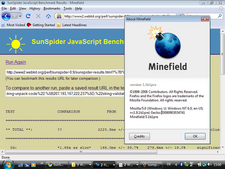
The result: Both JavaScript engines ran in a virtual tie, with the Google product slightly ahead, perhaps faster by 15 percent, not a substantial Chrome lead, considering the margin of error inherent in the SunSpider test. Significant differences emerged, however, in performing certain tasks: Chrome did better with 3D and crypto tasks; Firefox with strings, regex, and math. The German sister publication Linux Magazin Online provides the test results as a download.
Comments
comments powered by DisqusSubscribe to our Linux Newsletters
Find Linux and Open Source Jobs
Subscribe to our ADMIN Newsletters
Support Our Work
Linux Magazine content is made possible with support from readers like you. Please consider contributing when you’ve found an article to be beneficial.

News
-
Linux Servers Targeted by Akira Ransomware
A group of bad actors who have already extorted $42 million have their sights set on the Linux platform.
-
TUXEDO Computers Unveils Linux Laptop Featuring AMD Ryzen CPU
This latest release is the first laptop to include the new CPU from Ryzen and Linux preinstalled.
-
XZ Gets the All-Clear
The back door xz vulnerability has been officially reverted for Fedora 40 and versions 38 and 39 were never affected.
-
Canonical Collaborates with Qualcomm on New Venture
This new joint effort is geared toward bringing Ubuntu and Ubuntu Core to Qualcomm-powered devices.
-
Kodi 21.0 Open-Source Entertainment Hub Released
After a year of development, the award-winning Kodi cross-platform, media center software is now available with many new additions and improvements.
-
Linux Usage Increases in Two Key Areas
If market share is your thing, you'll be happy to know that Linux is on the rise in two areas that, if they keep climbing, could have serious meaning for Linux's future.
-
Vulnerability Discovered in xz Libraries
An urgent alert for Fedora 40 has been posted and users should pay attention.
-
Canonical Bumps LTS Support to 12 years
If you're worried that your Ubuntu LTS release won't be supported long enough to last, Canonical has a surprise for you in the form of 12 years of security coverage.
-
Fedora 40 Beta Released Soon
With the official release of Fedora 40 coming in April, it's almost time to download the beta and see what's new.
-
New Pentesting Distribution to Compete with Kali Linux
SnoopGod is now available for your testing needs
Google
Anyway, it is good news that Firefox will have parity in Javascript engine speed.
Good stuff