


Software-defined networking puts an end to patchwork administration

Re-Envisioning the Network

Globalization, rapidly increasing numbers of devices, virtualization, the cloud, and "bring your own device" make classically organized IP networks difficult to plan and manage. Instead of quarreling, some admins address these problems with a radically new approach: Software-defined networking.
Traditional IP networks are made up of a number of autonomous systems: switches, routers, and firewalls. The network devices evaluate incoming data packets by checking their tables and route the packets appropriately. For this to work, these systems need to be familiar with the network topology (Figure 1). The position of a particular device on the network defines its function; a change of position causes complication and reconfiguration.
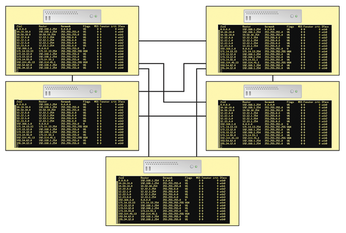
Over time, the Internet Engineering Task Force (IETF) has given administrators a series of protocols to help spice up the simple control logic. However, these extensions typically address only a specific task and are comparatively isolated. In addition, the growing number of these standards (in conjunction with vendor-specific optimizations and software dependencies) has bloated the complexity of today's network.
[...]
Buy this article as PDF
(incl. VAT)
Buy Linux Magazine
Subscribe to our Linux Newsletters
Find Linux and Open Source Jobs
Subscribe to our ADMIN Newsletters
Support Our Work
Linux Magazine content is made possible with support from readers like you. Please consider contributing when you’ve found an article to be beneficial.

News
-
openKylin 3.0 Released with Expanded AI Integration
The latest release features a pre-installed AI agent to help perform tasks.
-
DigitalOcean Ends Open Source Credits Program
In a change that has surprised many open source developers, DigitalOcean has decided to sunset its Open Source Credits Program.
-
Office 365 Available for Testing on Linux via Bottles
Linux users can now test the official Office 365, thanks to Mirko Brombin's work on Bottles.
-
Dutch Government Turns to Open Source for Digital Sovereignty
Following in the footsteps of other European countries, the Netherlands is looking to increase its sovereign digital infrastructure with open source software.
-
Linux May Soon Work on Snapdragon X2-Based PCs
If you're thinking about buying a Snapdragon X2-based desktop or laptop, Linux may soon be an option.
-
KDE for People Initiative Calls for AI Ban in Plasma
A new community of KDE wants the project to adopt a strict no-AI policy for KDE Plasma.
-
KDE Sets Ambitious Goals for 2026 and Beyond
KDE Connect reveals the goals for the Linux desktop darling, with one of those goals long overdue.
-
It’s Time to Test Fedora 45 Beta
Fedora 45 beta has been released with updated Gnome, KDE Plasma, and kernel.
-
Ubuntu Stonking Stingray Gets Even Rustier
Ubuntu 26.10 has completed its migration to the Rust-based coreutils.
-
AI Fixes Linux Bottlenecks Using “Hideous” Code
A Linux developer used AI to fix bottlenecks that caused problems when building the kernel. The resulting AI-generated code needed a lot of work.