


Tips for mixing safely

Mixology

© Lead Image © Andrey-Kiselev, 123RF.com
A little caution can save you hours of frustrating work (plus, options for mixing gone awry).
Debian package repositories are organized along two axes. The first axis controls the degree of software freedom in the installation. Newly installed, a Debian system includes only packages from the main section of the repository, which contains only free-licensed packages. However, you can enable the contrib section, which houses free packages that depend on non-free packages, and non-free, which houses packages with restrictive licenses, by editing the URLs for repositories in /etc/apt/sources.list (Figure 1). Little harm can come from this editing, and, in fact, it is necessary if you want to use the advanced proprietary hardware drivers. The second axis, though, is another matter. Tinkered with carelessly, it causes more reinstalls than any other aspect of Debian.
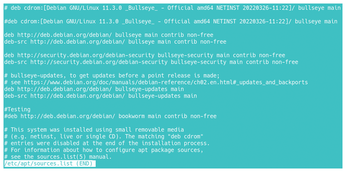
This second axis is the main Debian repositories themselves. By default, a Debian system enables only the stable repository. Stay with stable and you enjoy the full support of the distribution, including backports and security updates. But set up the testing and unstable repositories intended primarily for developers, and nothing is guaranteed. A single careless step, and you could lose your desktop environment, the ability to work with packages, or some other basic part of the installation, and find yourself condemned to hours of futile efforts to recover. Too often, a reinstall [1] is the quickest solution.
[...]
Buy this article as PDF
(incl. VAT)
Buy Linux Magazine
Subscribe to our Linux Newsletters
Find Linux and Open Source Jobs
Subscribe to our ADMIN Newsletters
Support Our Work
Linux Magazine content is made possible with support from readers like you. Please consider contributing when you’ve found an article to be beneficial.

News
-
openKylin 3.0 Released with Expanded AI Integration
The latest release features a pre-installed AI agent to help perform tasks.
-
DigitalOcean Ends Open Source Credits Program
In a change that has surprised many open source developers, DigitalOcean has decided to sunset its Open Source Credits Program.
-
Office 365 Available for Testing on Linux via Bottles
Linux users can now test the official Office 365, thanks to Mirko Brombin's work on Bottles.
-
Dutch Government Turns to Open Source for Digital Sovereignty
Following in the footsteps of other European countries, the Netherlands is looking to increase its sovereign digital infrastructure with open source software.
-
Linux May Soon Work on Snapdragon X2-Based PCs
If you're thinking about buying a Snapdragon X2-based desktop or laptop, Linux may soon be an option.
-
KDE for People Initiative Calls for AI Ban in Plasma
A new community of KDE wants the project to adopt a strict no-AI policy for KDE Plasma.
-
KDE Sets Ambitious Goals for 2026 and Beyond
KDE Connect reveals the goals for the Linux desktop darling, with one of those goals long overdue.
-
It’s Time to Test Fedora 45 Beta
Fedora 45 beta has been released with updated Gnome, KDE Plasma, and kernel.
-
Ubuntu Stonking Stingray Gets Even Rustier
Ubuntu 26.10 has completed its migration to the Rust-based coreutils.
-
AI Fixes Linux Bottlenecks Using “Hideous” Code
A Linux developer used AI to fix bottlenecks that caused problems when building the kernel. The resulting AI-generated code needed a lot of work.