


Korset: Linux security thanks to static analysis

Coworkers at the University of Tel Aviv have presented a prototype for a new host-based intrusion detection system (HIDS) for Linux. Named Korset, it uses static code analysis and promises zero failures.
A host-based intrusion system (HIDS) models an application’s behavior and if the behavior deviates from the model, it sends an alarm. Earlier methods of intrusion detection depended either on static data derived from machine learning or on program policies created by developers. In the views of Professor Avishai Wool and kernel developer Ohad Ben-Cohen, the first method is susceptible to false positives and the second one costly.
Instead, Wool and Ben-Cohen use a behavioral model automated through static analysis of source code and object files resulting in control flow graphs (CFGs). Since most attacks are accompanied by system calls, the CFGs limit themselves to these calls and document the legitimate pattern for each application. If a program deviates from the pattern, the kernel ends the process.
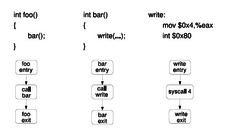
Korset consists of two parts: a static analyzer in user space and a runtime monitoring agent in the kernel. The analyzer is drawn into the program’s build process and creates a CFG for each executable, object data and library. The Korset runtime monitor is built into the kernel. Once a detected program runs, the agent monitors any resulting system calls and compares them with those of the CFG model.
Wool’s and Ben-Cohen’s report to the Ottawa Linux Symposium 2008 (PDF) includes further details about their work, as does their presentation at the Black Hat US 2008 conference.
A Korset prototype download is available under GPLv3 terms. The developers designate the implementation as pre-alpha software not yet ready for use, but proof-of-concept.
Comments
comments powered by DisqusSubscribe to our Linux Newsletters
Find Linux and Open Source Jobs
Subscribe to our ADMIN Newsletters
Support Our Work
Linux Magazine content is made possible with support from readers like you. Please consider contributing when you’ve found an article to be beneficial.

News
-
Linux Mint 27 Set for a Christmas Release
The developers behind Linux Mint have announced a Christmas release, and it looks like Santa's sack will be brimming with features.
-
Is Linus Torvalds Vibe Coding?
The creator of Linux has added AI into his process for Linux kernel development, and it's more than just for debugging.
-
openKylin 3.0 Released with Expanded AI Integration
The latest release features a pre-installed AI agent to help perform tasks.
-
DigitalOcean Ends Open Source Credits Program
In a change that has surprised many open source developers, DigitalOcean has decided to sunset its Open Source Credits Program.
-
Office 365 Available for Testing on Linux via Bottles
Linux users can now test the official Office 365, thanks to Mirko Brombin's work on Bottles.
-
Dutch Government Turns to Open Source for Digital Sovereignty
Following in the footsteps of other European countries, the Netherlands is looking to increase its sovereign digital infrastructure with open source software.
-
Linux May Soon Work on Snapdragon X2-Based PCs
If you're thinking about buying a Snapdragon X2-based desktop or laptop, Linux may soon be an option.
-
KDE for People Initiative Calls for AI Ban in Plasma
A new community of KDE wants the project to adopt a strict no-AI policy for KDE Plasma.
-
KDE Sets Ambitious Goals for 2026 and Beyond
KDE Connect reveals the goals for the Linux desktop darling, with one of those goals long overdue.
-
It’s Time to Test Fedora 45 Beta
Fedora 45 beta has been released with updated Gnome, KDE Plasma, and kernel.
Won't protect apps that include an interpreter.
Now, if Korset could analyze the script itself, not the interpreter, then you might get more information. But languages like Python and Ruby are so dynamic that static analysis can't usually tell you much, unless you restrict the language.
Not all that useful