GRUB-free booting

Goodbye Bootloader?

© Photo by Samuel Horn af Rantzien on Unssplash
Linux is in constant flux, which naturally affects the boot process. Bootloaders such as GRUB are slowly being replaced with a faster, more secure boot process.
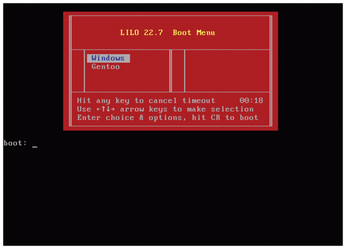
More than 20 years ago, early adopters of Linux would typically rely on the Linux Loader (LILO) boot manager to fire up their systems. LILO, which began development in 1992 with the last version released in 2015, had one major drawback: It was unable to read filesystems, meaning that it had to know the kernel's precise memory addresses. Every kernel update meant reading the blocks again before the system could boot. Despite this drawback, LILO was easy to configure and did not require filesystem support during the boot process, because it grabbed the kernel directly at the previously defined location on the hard disk (Figure 1).
At the turn of the millennium, the Grand Unified Bootloader (GRUB) gradually replaced LILO, because it offered more flexibility in terms of filesystems and installation targets. The majority of today's systems boot with the help of GRUB 2, which was first released in 2012. GRUB 2 can handle a wide variety of filesystems, plus encryption, compression, and RAID. For some time now, systems that use systemd to initialize have also been able to opt for systemd-boot [1], which emerged from the Gummiboot bootloader as an alternative.
[...]
Buy this article as PDF
(incl. VAT)