


ROSE Blog Interviews: Ellen Siever, co-author of Linux in a Nutshell

ROSE Blog: Rikki's Open Source Exchange
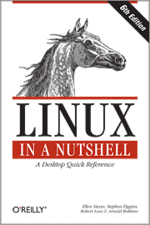
The latest release of O'Reilly's well-respected Linux in a Nutshell book recently hit bookstore shelves. Co-author Ellen Siever answers the ROSE Blog interview questions:
Q: Who are you?
A: I'm Ellen Siever. For many years I was a mainframe assembler language programmer, working at several companies in the Boston area. Later, I joined O'Reilly, where I stayed for almost 8 years in various capacities, including working in the tools group and as a writer and editor. Since leaving O'Reilly, I've continued to freelance for them, working on a book about the X Window System that never saw the light of day and on Linux in a Nutshell (which I've been an author of since the second edition). I'd used Unix before working at O'Reilly, but it was there that I got interested in Linux and open source.
Q: What are you currently doing in open source?
A: I've just finished working on the sixth edition of Linux in a Nutshell, and I regularly use Linux and other open source software, particularly OpenOffice.
Q: You're speaking to a group of women from other fields who are considering switching careers. Why should they consider moving into an open source-related career? What should they know about the open source environment to prepare them for the transition from a different field?
A: Switching careers is not always an easy thing to do, especially in a difficult economic environment. Open source is a particularly good choice because it is so open, because there is so much variety, because it's still a relatively young field and is growing, and because you can jump in on a volunteer basis to get started. Install Open Source software on your computer and experiment with it; look into the source code if you're a technical person and see how it's put together. Find a project that appeals to you and volunteer. You'll get experience, you'll provide a service, and you'll get to know other people in the open source community. This applies to everyone, female or male.
For women, I'd say that open source can sometimes feel like a men's club, and you might want to find other women to network with. One group that I know of, for example, is LinuxChix. On their web page, they describe the group and also have a list of other organizations for women working in open source. Also try social networks like Twitter or Facebook to connect with other open source women.
Q: You're speaking to a group of high school students (male and female). Why should they consider exploring career options in open source?
A: My answer to that is very similar to the previous one. One difference is that high school students have a longer timeframe and therefore have more time to explore different options. Again, a good way to get started is to experiment with the software, examine the source code, and find a project to volunteer for.
Check back later this week for my interview with Lawrence resident and Linux in a Nutshell contributor Stephen Figgins.
comments powered by DisqusSubscribe to our Linux Newsletters
Find Linux and Open Source Jobs
Subscribe to our ADMIN Newsletters
Support Our Work
Linux Magazine content is made possible with support from readers like you. Please consider contributing when you’ve found an article to be beneficial.

News
-
Is Linus Torvalds Vibe Coding?
The creator of Linux has added AI into his process for Linux kernel development, and it's more than just for debugging.
-
openKylin 3.0 Released with Expanded AI Integration
The latest release features a pre-installed AI agent to help perform tasks.
-
DigitalOcean Ends Open Source Credits Program
In a change that has surprised many open source developers, DigitalOcean has decided to sunset its Open Source Credits Program.
-
Office 365 Available for Testing on Linux via Bottles
Linux users can now test the official Office 365, thanks to Mirko Brombin's work on Bottles.
-
Dutch Government Turns to Open Source for Digital Sovereignty
Following in the footsteps of other European countries, the Netherlands is looking to increase its sovereign digital infrastructure with open source software.
-
Linux May Soon Work on Snapdragon X2-Based PCs
If you're thinking about buying a Snapdragon X2-based desktop or laptop, Linux may soon be an option.
-
KDE for People Initiative Calls for AI Ban in Plasma
A new community of KDE wants the project to adopt a strict no-AI policy for KDE Plasma.
-
KDE Sets Ambitious Goals for 2026 and Beyond
KDE Connect reveals the goals for the Linux desktop darling, with one of those goals long overdue.
-
It’s Time to Test Fedora 45 Beta
Fedora 45 beta has been released with updated Gnome, KDE Plasma, and kernel.
-
Ubuntu Stonking Stingray Gets Even Rustier
Ubuntu 26.10 has completed its migration to the Rust-based coreutils.