


Fresh Wind at Work: OpenOffice 3.1

Cute but astute: the new minor version of OpenOffice can do more than ever, such as cast shadows, position chart axes and provide structured conversations through comments.
After December's feature freeze and the release candidate exactly a month ago, OpenOffice 3.1 now enters onstage in time with its roadmap. One new feature is anti-aliasing to improve clarity of graphics. Another is leaving shadows of objects behind instead of dotted outlines when moving graphics. An improved file locking mechanism prevents overwrites and reports who most recently had the file open. To encourage collaboration, replies to comments now lead to dialogue when editing text.
Also new in OpenOffice Writer is that it targets document writers with more involved ordering formats and automatic indexing. They can now apply an "outline level" to a normal paragraph to designate it as a heading for indexing without modifying the style or paragraph structure.
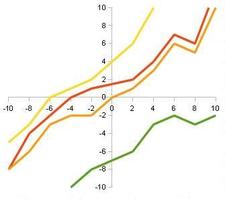
As far as OpenOffice Calc, it now has help for writing formulas with hot hints showing the formula syntax next to the cell. Charting also went through some changes based on user feedback to OpenOffice's QA public request mechanism. One change based on demand from educational users is a flexible positioning of chart axes and axis labels, functionality that already exists in MS Excel and Gnome's Gnumeric, thus categorizing the request not only under "usability" but also "interoperability." From several respondents: "This is important for the possibility to use OOoCalc in building official exam documents in France... All secondary schools in North of France... have now at least one classroom, with one computer for each pupil. We have installed OpenOffice everywhere... So this requirement [of having axis labels on the edges of the diagram area] is really important for us, and will favorably influence the choice of OpenOffice Calc in most French schools." Thus the enhancement.
For OpenOffice Base users who work with macros, some new changes occurred. As of version 3.1, OpenOffice stores database applications with macros and scripts directly as an .odb file and not in subcomponents such as forms and reports. All macros were moved into the main part of the database. A warning on the Base wiki page is clear about incompatibility issues when opening previous documents with macros or scripts unless migrating the documents, which you can accomplish using a "Migrate Macros" wizard.
OpenOffice 3.1 downloads are available from the project website.
Subscribe to our Linux Newsletters
Find Linux and Open Source Jobs
Subscribe to our ADMIN Newsletters
Support Our Work
Linux Magazine content is made possible with support from readers like you. Please consider contributing when you’ve found an article to be beneficial.

News
-
Is Linus Torvalds Vibe Coding?
The creator of Linux has added AI into his process for Linux kernel development, and it's more than just for debugging.
-
openKylin 3.0 Released with Expanded AI Integration
The latest release features a pre-installed AI agent to help perform tasks.
-
DigitalOcean Ends Open Source Credits Program
In a change that has surprised many open source developers, DigitalOcean has decided to sunset its Open Source Credits Program.
-
Office 365 Available for Testing on Linux via Bottles
Linux users can now test the official Office 365, thanks to Mirko Brombin's work on Bottles.
-
Dutch Government Turns to Open Source for Digital Sovereignty
Following in the footsteps of other European countries, the Netherlands is looking to increase its sovereign digital infrastructure with open source software.
-
Linux May Soon Work on Snapdragon X2-Based PCs
If you're thinking about buying a Snapdragon X2-based desktop or laptop, Linux may soon be an option.
-
KDE for People Initiative Calls for AI Ban in Plasma
A new community of KDE wants the project to adopt a strict no-AI policy for KDE Plasma.
-
KDE Sets Ambitious Goals for 2026 and Beyond
KDE Connect reveals the goals for the Linux desktop darling, with one of those goals long overdue.
-
It’s Time to Test Fedora 45 Beta
Fedora 45 beta has been released with updated Gnome, KDE Plasma, and kernel.
-
Ubuntu Stonking Stingray Gets Even Rustier
Ubuntu 26.10 has completed its migration to the Rust-based coreutils.