


Going from a sketch to a printed object

Emergence
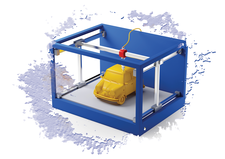
How do you get from an idea to a finished printed object? We'll take you through the steps with a glamorous example: a pair of 3D-printed earrings.
Every 3D-printed project begins with an idea. Where does the idea come from? The simplest solution is to use a model that already exists. Several Internet platforms collect finished 3D models, including MyMiniFactory [1], Thingiverse [2], or even a special NASA [3] website. From these sites, you can download finished 3D models for printing, and in some cases, you can even publish your own 3D models for the community.
Another way to create a 3D model is to scan or photograph real-world objects and then use software, such as a photogrammetry application, to generate a model. For instance, you could photograph an object from different perspectives and from all sides; when you have created 50 or more photos, you can then convert the photos into a 3D model using specialized software. See the 3Dnatives site [4] for an overview of possible software tools, including some open source programs.
A third approach is to design a 3D model directly and then print the design. This article demonstrates this approach with a pair of earrings. Their shape was first sketched the old-fashioned way using a pencil and paper (Figure 1). You can see two rectangles pushed into each other. The next step is to transfer this project idea to a 3D model.
[...]
Buy this article as PDF
(incl. VAT)
Buy Linux Magazine
Subscribe to our Linux Newsletters
Find Linux and Open Source Jobs
Subscribe to our ADMIN Newsletters
Support Our Work
Linux Magazine content is made possible with support from readers like you. Please consider contributing when you’ve found an article to be beneficial.

News
-
PwnEscape Poses VM Vulnerability
A guest-to-host escape flaw in Linux KVM, named PwnEscape, might be yet another means of attacking Linux.
-
Linux Mint 27 Set for a Christmas Release
The developers behind Linux Mint have announced a Christmas release, and it looks like Santa's sack will be brimming with features.
-
Is Linus Torvalds Vibe Coding?
The creator of Linux has added AI into his process for Linux kernel development, and it's more than just for debugging.
-
openKylin 3.0 Released with Expanded AI Integration
The latest release features a pre-installed AI agent to help perform tasks.
-
DigitalOcean Ends Open Source Credits Program
In a change that has surprised many open source developers, DigitalOcean has decided to sunset its Open Source Credits Program.
-
Office 365 Available for Testing on Linux via Bottles
Linux users can now test the official Office 365, thanks to Mirko Brombin's work on Bottles.
-
Dutch Government Turns to Open Source for Digital Sovereignty
Following in the footsteps of other European countries, the Netherlands is looking to increase its sovereign digital infrastructure with open source software.
-
Linux May Soon Work on Snapdragon X2-Based PCs
If you're thinking about buying a Snapdragon X2-based desktop or laptop, Linux may soon be an option.
-
KDE for People Initiative Calls for AI Ban in Plasma
A new community of KDE wants the project to adopt a strict no-AI policy for KDE Plasma.
-
KDE Sets Ambitious Goals for 2026 and Beyond
KDE Connect reveals the goals for the Linux desktop darling, with one of those goals long overdue.