


Using a Raspberry Pi to put a legacy printer on the network

New Life

© Photo by Ales Maze on Unsplash
Niche hardware from the olden days does not always embrace the network. Attaching a Raspberry Pi or other single board computer can add lots of new functionality.
I inherited a DYMO 400 label printer that has a simple USB connection, but it has recently lost the Windows support lottery. My goal was to convert this old standalone label printer (Figure 1) into a network label printer that all the computers on my network can access. Linux users often chafe at the need to replace hardware that is still functioning perfectly well, so keeping an old printer going is a problem that many of us have faced in the past. In this case, it actually appears that the old version of the printer might function better than the newer model (see the box entitled "DRM Woes"), so I'd prefer to keep using it.
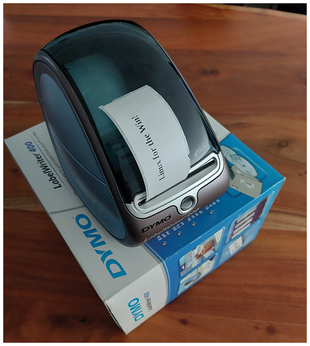
The Linux ecosystem is a rich and mature environment with all sorts of programs and utilities that cover almost any situation, but back in the 1990s, printing support in Linux was fairly limited due to the large number of standards and protocols and the lack of Linux-specific drivers. In 1999, Easy Software Products saw this defect/opportunity and created the Common UNIX Printing System (CUPS). The CUPS solution basically turns the computer running it into a print server.
[...]
Buy this article as PDF
(incl. VAT)
Buy Linux Magazine
Subscribe to our Linux Newsletters
Find Linux and Open Source Jobs
Subscribe to our ADMIN Newsletters
Support Our Work
Linux Magazine content is made possible with support from readers like you. Please consider contributing when you’ve found an article to be beneficial.

News
-
Linux Mint 27 Set for a Christmas Release
The developers behind Linux Mint have announced a Christmas release, and it looks like Santa's sack will be brimming with features.
-
Is Linus Torvalds Vibe Coding?
The creator of Linux has added AI into his process for Linux kernel development, and it's more than just for debugging.
-
openKylin 3.0 Released with Expanded AI Integration
The latest release features a pre-installed AI agent to help perform tasks.
-
DigitalOcean Ends Open Source Credits Program
In a change that has surprised many open source developers, DigitalOcean has decided to sunset its Open Source Credits Program.
-
Office 365 Available for Testing on Linux via Bottles
Linux users can now test the official Office 365, thanks to Mirko Brombin's work on Bottles.
-
Dutch Government Turns to Open Source for Digital Sovereignty
Following in the footsteps of other European countries, the Netherlands is looking to increase its sovereign digital infrastructure with open source software.
-
Linux May Soon Work on Snapdragon X2-Based PCs
If you're thinking about buying a Snapdragon X2-based desktop or laptop, Linux may soon be an option.
-
KDE for People Initiative Calls for AI Ban in Plasma
A new community of KDE wants the project to adopt a strict no-AI policy for KDE Plasma.
-
KDE Sets Ambitious Goals for 2026 and Beyond
KDE Connect reveals the goals for the Linux desktop darling, with one of those goals long overdue.
-
It’s Time to Test Fedora 45 Beta
Fedora 45 beta has been released with updated Gnome, KDE Plasma, and kernel.