


USENIX Tips for Admins: Virtualization and HPC Don't Go Together

At the USENIX LISA conference in San Diego, Lee Damon and Mike Ciavarella presented a foundation workship as a tutorial for admins with tips and tricks for working efficiently. The presentors didn't agree on all points, but one commonality was that they advised against running High Performance Computing (HPC) together with virtualization.
Virtualization was one of the main themes at the California conference, where workshops on the subject ranged from the open source Hypervisor Xen and virtualization with VMware ESX Server to a training session for programming virtual infrastructures. All this information prompted Damon and Ciavarella to warn against making rash decisions without first thoroughly testing a solution. Damon came up with a study in point. As sysadmin at the University of Washington, he has been maintaining huge clusters with HPC. Although he doesn't doubt the usefulness of virtualized systems, he feels that combining them with HPC can be problematic. His Australian colleague Ciavarella concurs in that he has had similar experience at the University of Melbourne.
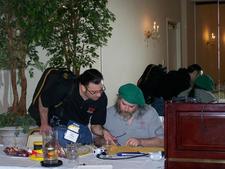
In their often entertaining presentation, the two colleagues waxed skeptical in general about some of the new fashions in IT. One example is the iPod, which they observed some sysadmins using even as a backup solution. Damon cited another example where a sysadmin asked him for advice how he could reduce his workload, admitting that he often put in 120-hour weeks. This overtime was mainly because of downloads and patch updates for the countless open source applications he needed to administer. The response from Damon and Ciavarella was "Think of it, free software isn't necessarily free, even with no licensing fees. It costs labor hours!" On the one hand not all updates make sense. On the other, it might be best to calculate whether commercial support contracts easily offset working time best used otherwise. In the experience of the two presentors, many sysadmins forgo this calculation in favor of existing support contracts.
The overall consensus was that working time is a major issue among sysadmins, who even during the conference were incessantly juggling laptops, beepers and cell phones. Many of the tips that came out of this tutorial revolved around this issue and documentation was presented as one major bit of help. In fact, Ciavarella is dedicating another tutorial Wednesday on the subject with the title "Documentation Techniques for Sysadmins."
The streaming video of the LISA'08 conference is available at a cost from here.
Subscribe to our Linux Newsletters
Find Linux and Open Source Jobs
Subscribe to our ADMIN Newsletters
Support Our Work
Linux Magazine content is made possible with support from readers like you. Please consider contributing when you’ve found an article to be beneficial.

News
-
The Linux Kernel Dev Staging Area Now Rejects AI-Generated Patches
Unless a kernel patch is a valid security fix, it will be rejected if it was created using AI.
-
Linux Surpasses Double-Digit Market Share
According to two sources, the Linux operating system has hit a major milestone in market share that naysayers thought would never happen.
-
AI Helped Develop a Linux Exploit
A use-after-free race exploit was discovered and exploited on CentOS Stream 9.
-
Yet Another Linux Kernel Vulnerability Discovered
Affecting millions of systems, a kernel flaw discovered by Qualys could allow users to gain root privileges.
-
Ubuntu 26.10 to Include Ubuntu Certified Hardware Check
If you've ever wondered if your laptop or PC is officially certified to run Ubuntu, that curiosity will soon be met.
-
Substantial Update to IPFire Now Available
The lastest version of IPFire features a fundamental change to how the system handles DNS.
-
Gnome Working on Test Center App to Make Testing Easier
It's now possible to test experimental features on the Gnome desktop without worrying that you'll break things.
-
New Vulnerability Discovered in Linux Kernel
Hiding out for nearly 15 years, the Ghostlock vulnerability allows a standard logged-in user to gain root privileges.
-
New Linux Flaw Lets Attackers Escape VMs
A 16-year-old vulnerability allows an attacker to escape a virtual machine, gain access to the host, and execute malicious code.
-
Hannah Montana Linux Is Back!
Developer Noah Cagle decided the world needed the once obscure but beloved Linux distribution and gave it a decidedly pink refresh.