


The Raspberry Pi as a motion-sensing webcam

Big Pi is Watching

© Lead Image © racorn, 123RF.com
The new PiCam camera for the Raspberry Pi delivers image data with very little overhead, making it ideal for video surveillance applications. We find the bumps in the road you'll encounter and show you how to smooth them out with a few Linux commands and pipes.
Video surveillance has become a hot topic, but most cameras available are not really recommended: A colleague recently described the hair-raising vulnerabilities that Linux-based web and netcams typically entail in a blog post [1]. After this kind of read, Linux admins will probably prefer to look for alternatives, which will take them right to the Raspberry Pi with the PiCam add-on (see the "Rasp Pi HD Video Camera" box).
The Hardware
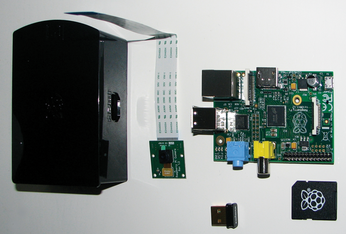
The equipment need not cost an arm and a leg. Figure 1 shows the components used in this example: Anyone wanting to use the camera in places without Ethernet wiring will need a WiFi dongle and case. The Pi detects most wireless dongles automatically; in our lab, I used a USB dongle by Edimax. The SD card comes with several OS images, which will save you a huge amount of work for a small additional price.
[...]
Buy this article as PDF
(incl. VAT)
Buy Linux Magazine
Subscribe to our Linux Newsletters
Find Linux and Open Source Jobs
Subscribe to our ADMIN Newsletters
Support Our Work
Linux Magazine content is made possible with support from readers like you. Please consider contributing when you’ve found an article to be beneficial.

News
-
openKylin 3.0 Released with Expanded AI Integration
The latest release features a pre-installed AI agent to help perform tasks.
-
DigitalOcean Ends Open Source Credits Program
In a change that has surprised many open source developers, DigitalOcean has decided to sunset its Open Source Credits Program.
-
Office 365 Available for Testing on Linux via Bottles
Linux users can now test the official Office 365, thanks to Mirko Brombin's work on Bottles.
-
Dutch Government Turns to Open Source for Digital Sovereignty
Following in the footsteps of other European countries, the Netherlands is looking to increase its sovereign digital infrastructure with open source software.
-
Linux May Soon Work on Snapdragon X2-Based PCs
If you're thinking about buying a Snapdragon X2-based desktop or laptop, Linux may soon be an option.
-
KDE for People Initiative Calls for AI Ban in Plasma
A new community of KDE wants the project to adopt a strict no-AI policy for KDE Plasma.
-
KDE Sets Ambitious Goals for 2026 and Beyond
KDE Connect reveals the goals for the Linux desktop darling, with one of those goals long overdue.
-
It’s Time to Test Fedora 45 Beta
Fedora 45 beta has been released with updated Gnome, KDE Plasma, and kernel.
-
Ubuntu Stonking Stingray Gets Even Rustier
Ubuntu 26.10 has completed its migration to the Rust-based coreutils.
-
AI Fixes Linux Bottlenecks Using “Hideous” Code
A Linux developer used AI to fix bottlenecks that caused problems when building the kernel. The resulting AI-generated code needed a lot of work.